
What to expect during each phase of the 'blood moon' total lunar eclipse on March 3
Space.com
by Anthony Wood February 25, 2026
AI-Generated Deep Dive Summary
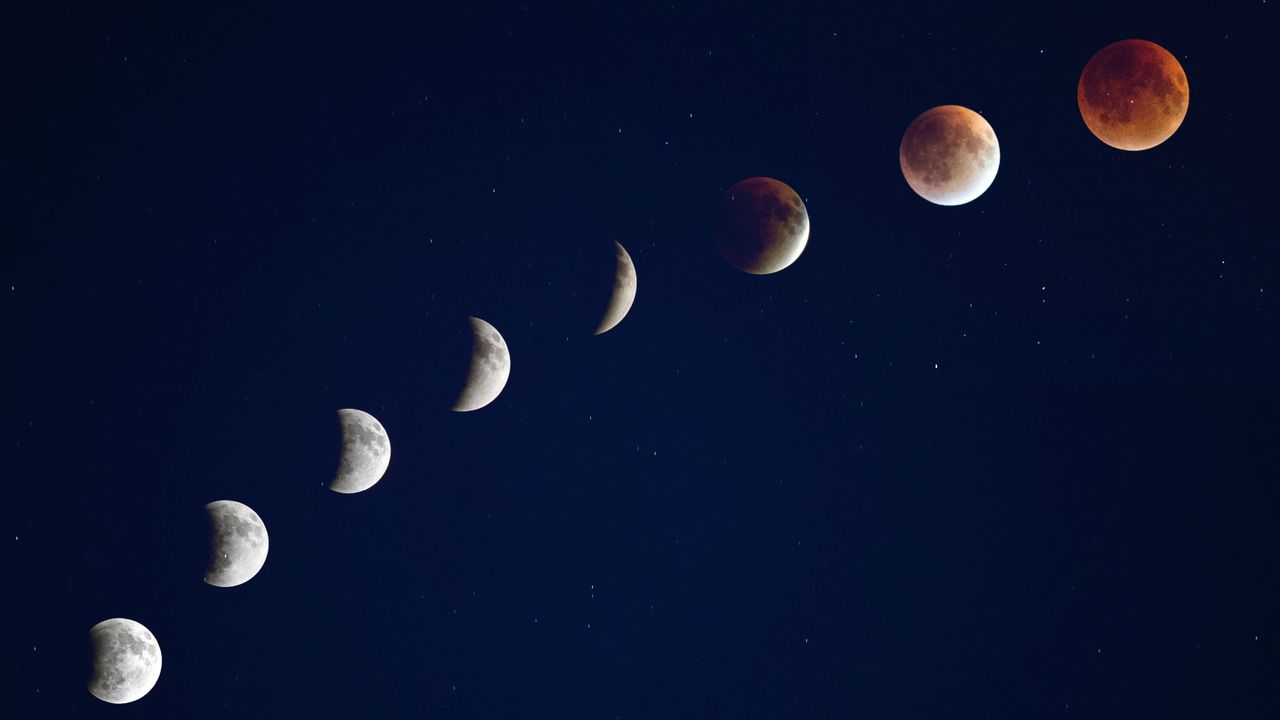
The March 3 total lunar eclipse, also known as a "blood moon," will be visible across North America, Asia, and Oceania during early morning hours. This celestial event occurs when Earth aligns between the sun and the moon, casting a shadow on the lunar surface and creating the striking red hue associated with the blood moon phase. The eclipse begins at 3:44 a.m. EST (0833 GMT) with the penumbral phase, where the moon gradually enters Earth's outer shadow, leading to subtle darkening of its surface. By 6:04 a.m. EST (1104 GMT), the moon will fully enter Earth's umbral shadow, marking the start of totality and the dramatic red coloring caused by Rayleigh scattering, which filters out shorter blue wavelengths while allowing longer red ones to illuminate the moon.
The partial phase begins at 4:50 a.m. EST (0950 GMT) as Earth's inner shadow starts to encroach on the lunar disk, creating a black silhouette that gradually overtakes the moon. During totality, which lasts from 6:04 a.m. to 6:33 a.m. EST (1104 GMT to 1133 GMT), the moon will appear entirely red. This phase is when the eclipse reaches its peak, with the moon passing closest to Earth's shadow center at 6:33 a.m. EST (1133 GMT). Observers in the eastern U.S., including cities like New York and those as far west as Montana, Wyoming
Verticals
spacescience
Originally published on Space.com on 2/25/2026