
Where to see the total lunar eclipse in the early hours of March 3
Space.com
by Daisy Dobrijevic February 24, 2026
AI-Generated Deep Dive Summary
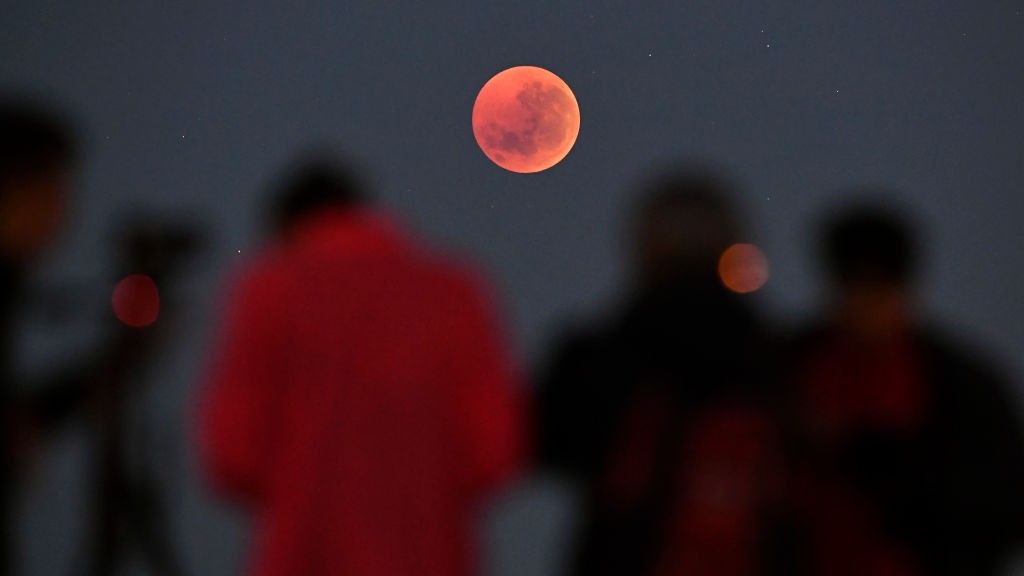
The early hours of March 3, 2026, will witness a striking total lunar eclipse, known as a blood moon, visible across parts of North America, Australia, New Zealand, and eastern Asia. This celestial event promises to captivate skywatchers with its dramatic red hue, which occurs when the moon is fully shrouded in Earth's shadow. The eclipse will last 58 minutes, offering enthusiasts a unique opportunity to observe this natural wonder.
A total lunar eclipse happens when Earth positions itself between the sun and the moon, casting a shadow on the moon that filters through Earth's atmosphere. This atmospheric scattering of light, known as Rayleigh scattering, gives the moon its characteristic coppery-red color. While the eclipse will be visible from many regions, the best viewing conditions are expected in the western half of North America, Australia, and the Pacific. The timing varies by location: from 6:04 a.m. EST (1104 GMT) to 7:02 a.m. EST (1202 GMT), with local adjustments for different time zones.
For example, in North America, viewers in the Eastern Time Zone will see the moon set during totality, while those in the Pacific Time Zone can enjoy the full eclipse before sunrise. To determine visibility and exact timings for your location, tools like Time and Date provide detailed information. Observers in New York, for instance, will witness the moon enter totality but may miss its deepest phase due to moonset.
This event is a reminder of the beauty and significance of celestial phenomena. Unlike solar eclipses, lunar eclipses are entirely safe to view with the naked eye, making them accessible to everyone. The transformation from a bright silver moon to a deep red during totality offers a unique spectacle that combines science and wonder, perfect for stargazers and casual observers alike.
For those passionate about astronomy, this eclipse is a prime opportunity to connect with the night sky and appreciate the natural processes that shape our universe. Whether you're in North America, Australia, or Asia, planning ahead to find a dark, clear location will enhance your viewing experience. For enthusiasts of space science, this event
Verticals
spacescience
Originally published on Space.com on 2/24/2026