
Why Brics can’t do away with US dollar even as currency cooperation rises
South China Morning Post
by Junaid KathjuFebruary 25, 2026
AI-Generated Deep Dive Summary
Brazil’s recent dismissal of the idea of creating a shared currency within the BRICS bloc highlights the group’s cautious approach to monetary cooperation. President Luiz Inacio Lula da Silva emphasized during his visit to India that there have been no formal proposals or discussions regarding a BRICS currency, downplaying speculation about such plans. Instead, Brazil and other BRICS nations are focusing on less confrontational measures, such as currency swaps and improved payment systems, to reduce reliance on the US dollar without directly challenging its dominance.
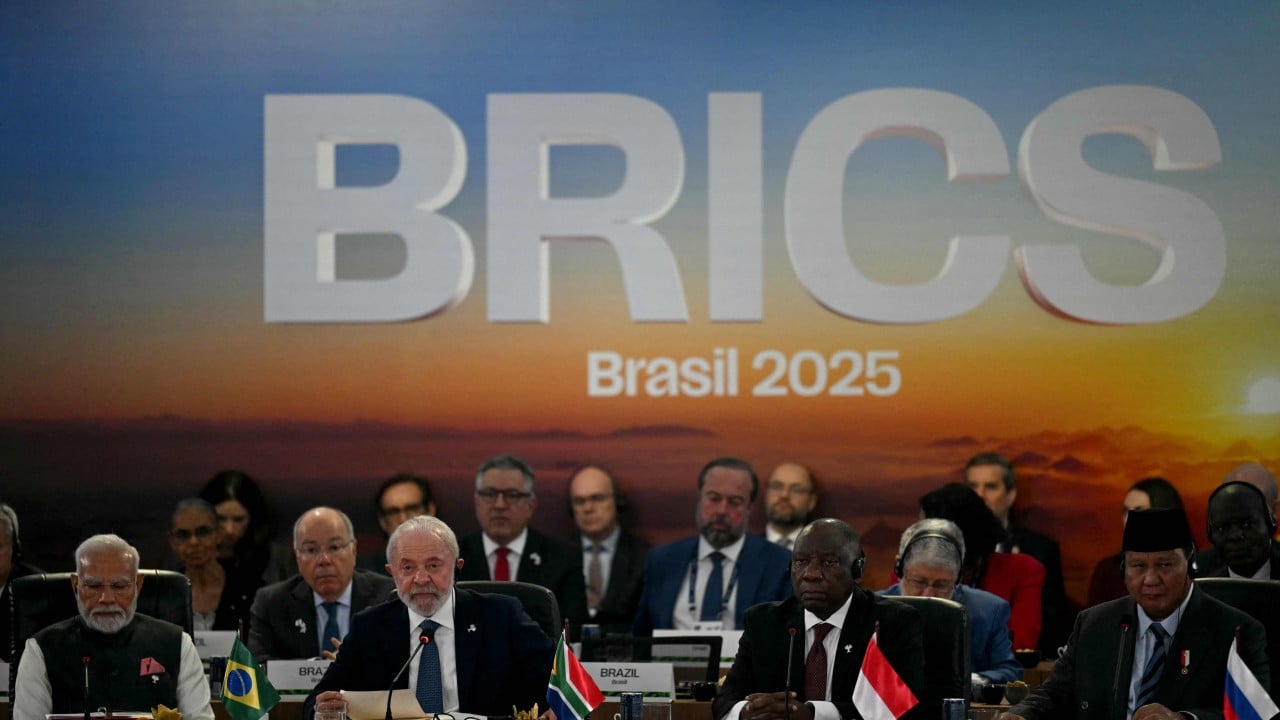
The idea of a BRICS currency has been floated in recent years as part of broader efforts to de-dollarize international trade. During the 2023 BRICS summit in South Africa, leaders discussed ways to settle more trade within the bloc without involving the US dollar. Similarly, at the 2025 summit in Brazil, Russian President Vladimir Putin called for greater use of local currencies in trade. However, these discussions have not yet translated into concrete plans for a unified currency.
Lula’s comments suggest that BRICS countries are prioritizing practical, incremental steps over more ambitious initiatives like creating a new currency. For instance, Brazil and India already engage in trade using their own currencies, reducing the need for US dollar reliance in bilateral deals. Such arrangements align with the bloc’s goal of fostering economic independence while avoiding political tensions tied to challenging the dominance of the world’s leading reserve currency.
The reluctance to pursue a BRICS currency underscores the delicate balance these nations must strike between asserting economic autonomy and maintaining stability in global markets. While the US dollar remains the cornerstone of international trade, BRICS countries are exploring alternative arrangements to reduce their vulnerability to its fluctuations. This approach reflects a growing recognition of the need for diverse and resilient financial systems in an increasingly interconnected world.
Ultimately, the focus
Verticals
worldasia
Originally published on South China Morning Post on 2/25/2026