
Why DAO Governance Always Turns Political
The Defiant
by Camila RussoFebruary 21, 2026
AI-Generated Deep Dive Summary
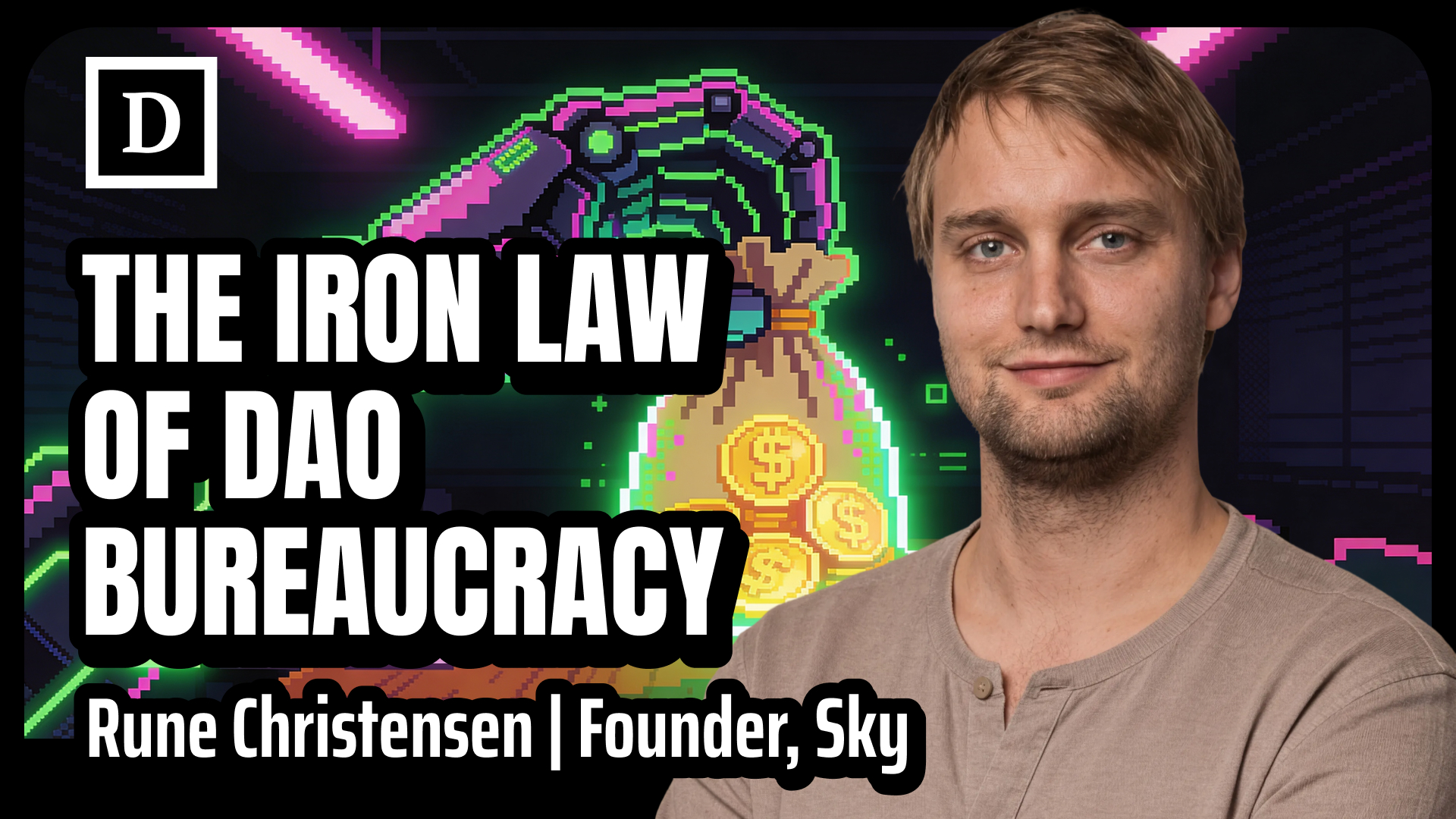
Decentralized Autonomous Organizations (DAOs) are often touted as the pinnacle of decentralized decision-making, but their governance systems inevitably become politicized, according to Rune Christensen, co-founder of Sky. In this interview, he explains how DAOs naturally evolve into battlegrounds for resources and influence, leading to power struggles and bureaucratic inefficiencies—a phenomenon he refers to as the "iron law of bureaucracy." This politicalization stems from the inherent competition among members with diverse interests, making it difficult to achieve consensus and maintain long-term stability. To combat these challenges, Sky has reimagined its governance architecture, prioritizing sustainability and resource management over short-term gains.
The article highlights how DAOs, despite their decentralized ethos, often fall into cycles of power consolidation and inefficiency. Christensen draws parallels between DAO governance and traditional organizational structures, where hierarchies and incentives inevitably create friction. He points to examples like the growth of USDS (a stablecoin) and Genesis Capital as instances where resource allocation decisions spark conflict and political maneuvering. These dynamics underscore the broader challenges faced by decentralized systems in balancing fairness, efficiency, and long-term vision.
Sky’s approach to overcoming these hurdles involves redesigning its governance framework to prioritize sustainability and resilience. By focusing on a long-term vision for decentralized finance (DeFi), Sky aims to create a system where resource allocation aligns with the collective interest rather than individual agendas. Christensen emphasizes the importance of creating guardrails and clear decision-making processes to mitigate the risks of politicalization and bureaucracy. This shift in governance strategy highlights the potential for DAOs to evolve beyond their current limitations and establish more stable, sustainable models.
For readers interested in crypto and DeFi, understanding the political dynamics of DAO governance is crucial. As these systems continue to grow in influence and complexity, their ability to navigate power struggles and maintain efficiency will determine their long-term success. Christensen’s insights offer valuable lessons for both existing
Verticals
cryptodefi
Originally published on The Defiant on 2/21/2026