
Why do some places on Earth get far more solar eclipses than others?
Space.com
by Jamie Carter February 22, 2026
AI-Generated Deep Dive Summary
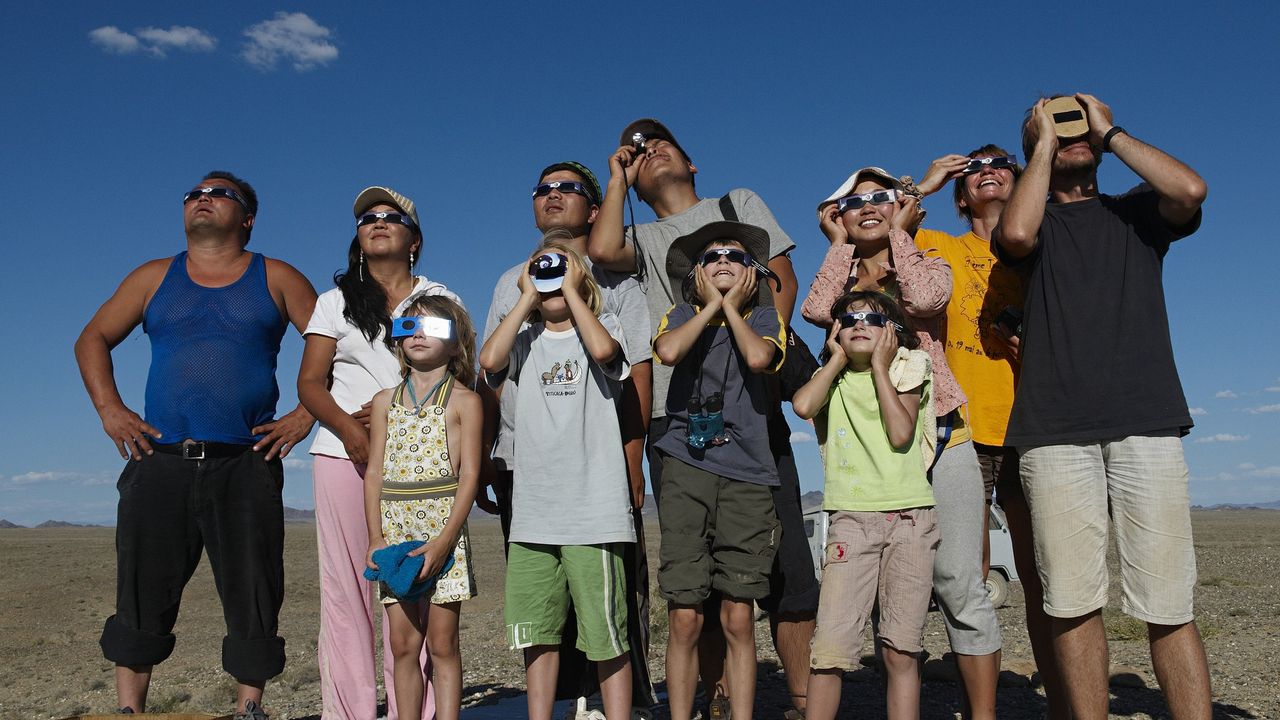
Solar eclipses are a fascinating yet unpredictable cosmic events, with some regions of Earth experiencing them far more frequently than others. While places like Jerusalem can go centuries without witnessing a total solar eclipse—such as its last one in 1153, which won't occur again until 2241—other areas, like parts of the U.S., have seen two in just seven years. This disparity arises from the complex interplay of Earth's orbit, the Moon's path, and celestial mechanics.
The frequency of total solar eclipses at any given location is highly irregular, with an average interval of around 375 years, as calculated by astronomer Jean Meeus. However, recent studies using advanced computational power have refined this figure slightly to about 373 years. These calculations are based on data spanning thousands of years and consider factors like the Moon's orbital cycles and Earth's rotation.
The distribution of eclipses across the globe is also influenced by latitude. Regions near the Arctic and Antarctic Circles experience more frequent total solar eclipses, while areas closer to the equator may go longer periods without one. This "latitude effect" highlights how Earth's position in relation to the Sun and Moon plays a crucial role in determining eclipse patterns.
Understanding where and when solar eclipses occur is not just an academic curiosity—it has practical applications. For instance, researchers can use eclipse data to study celestial alignments, plan events like eclipse tourism, or even explore ancient cultures' astronomical knowledge through archaeological findings. For space enthusiasts, this deeper dive into orbital mechanics offers a unique window into the interconnected dance of Earth, the Moon, and the Sun.
In essence, while total solar eclipses are possible anywhere on Earth, their frequency and distribution depend on intricate orbital dynamics. This makes them both rare and special events, offering a glimpse into the cosmic forces that shape our world—and our understanding of it.
Verticals
spacescience
Originally published on Space.com on 2/22/2026